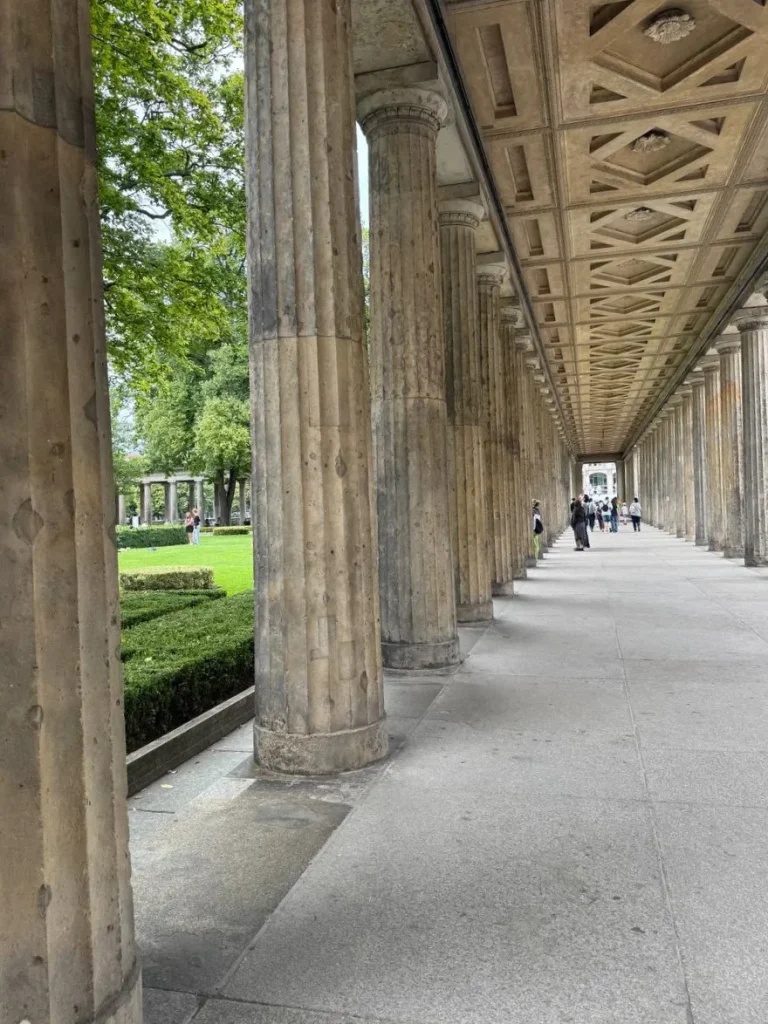
Museum Island
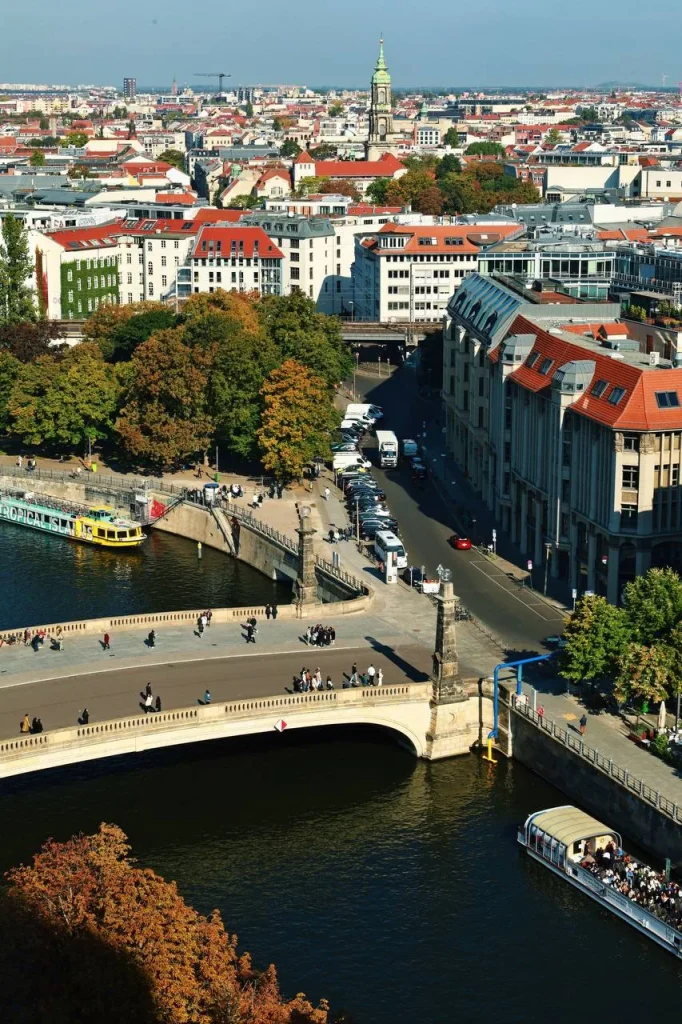
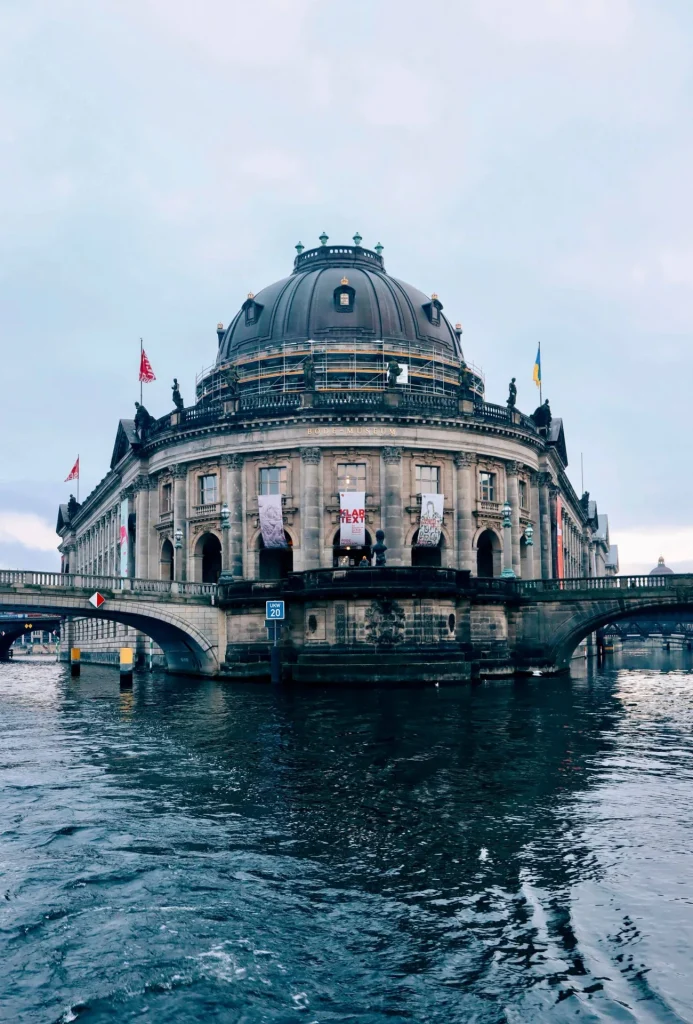
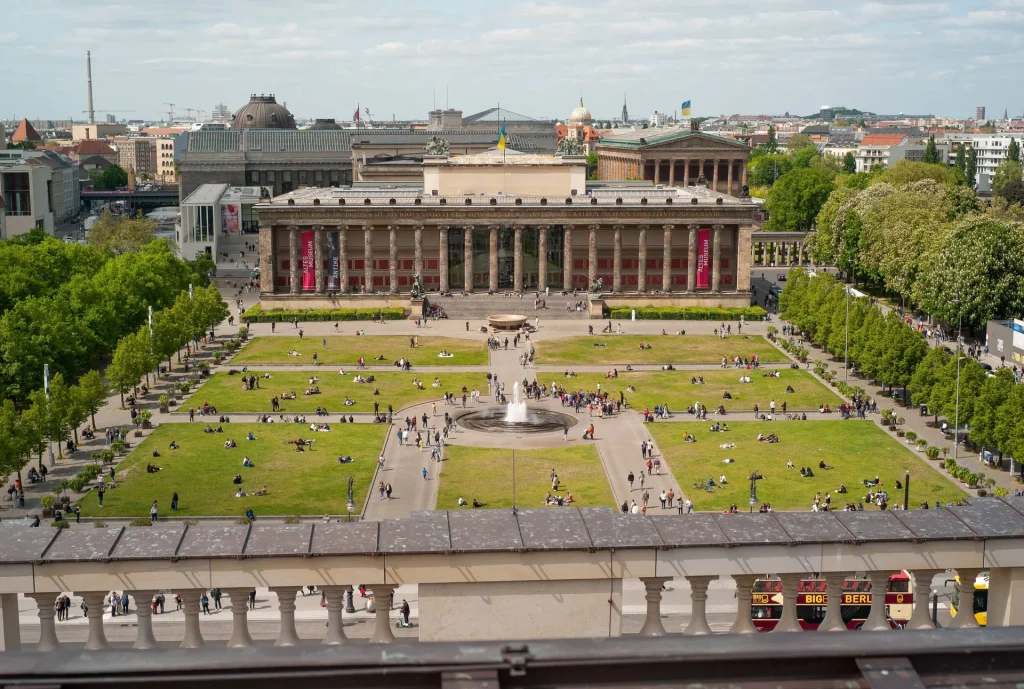
We begin on Museum Island, a Unesco World Heritage Site. We visit the Neues Museum, a magnificent building both outside and in.

Germany
Symphony of a great city
A signature journey
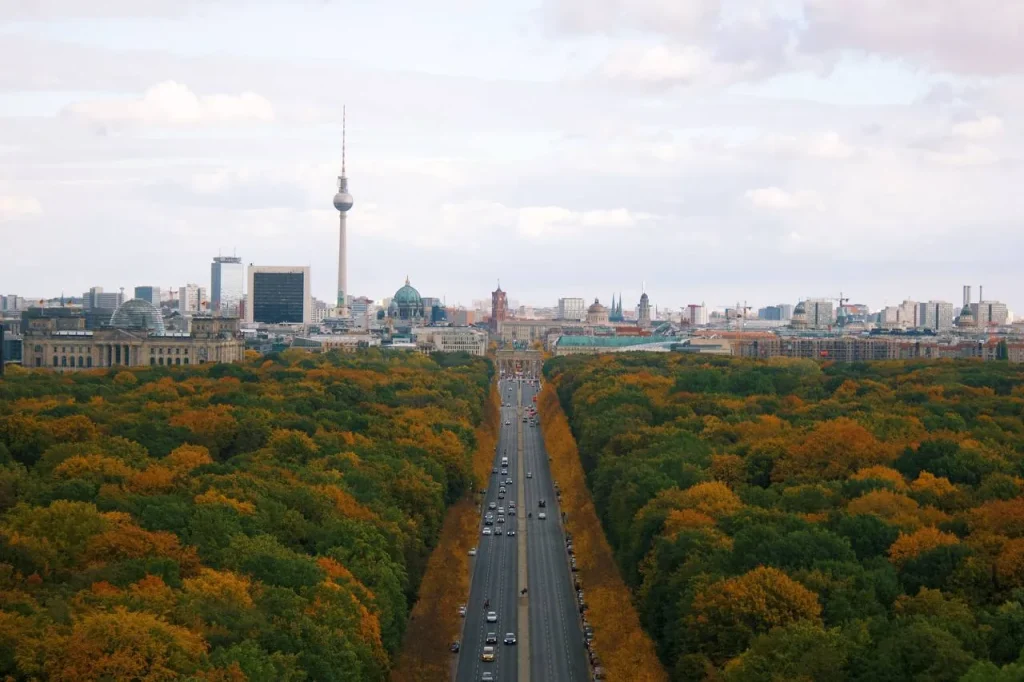
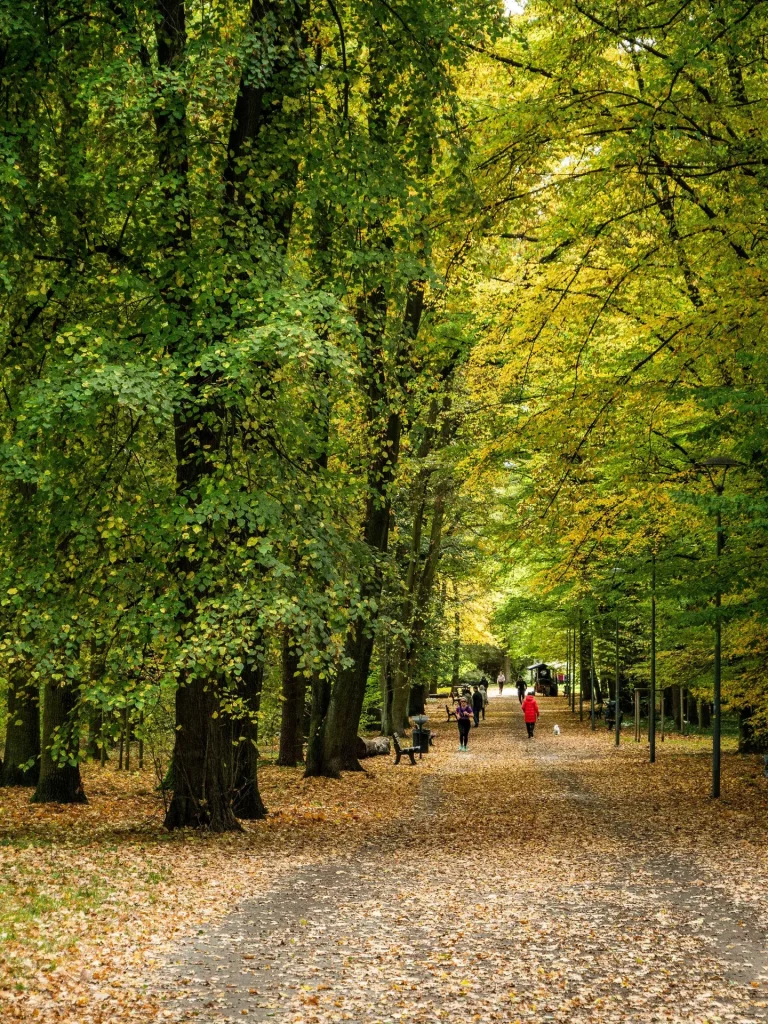
Berlin, with an area of 900 square kilometres, has the scale of a great metropolis and a unique relationship with nature. Close to 30 % of its area is green space and woodland. More than a million trees are part of the city.
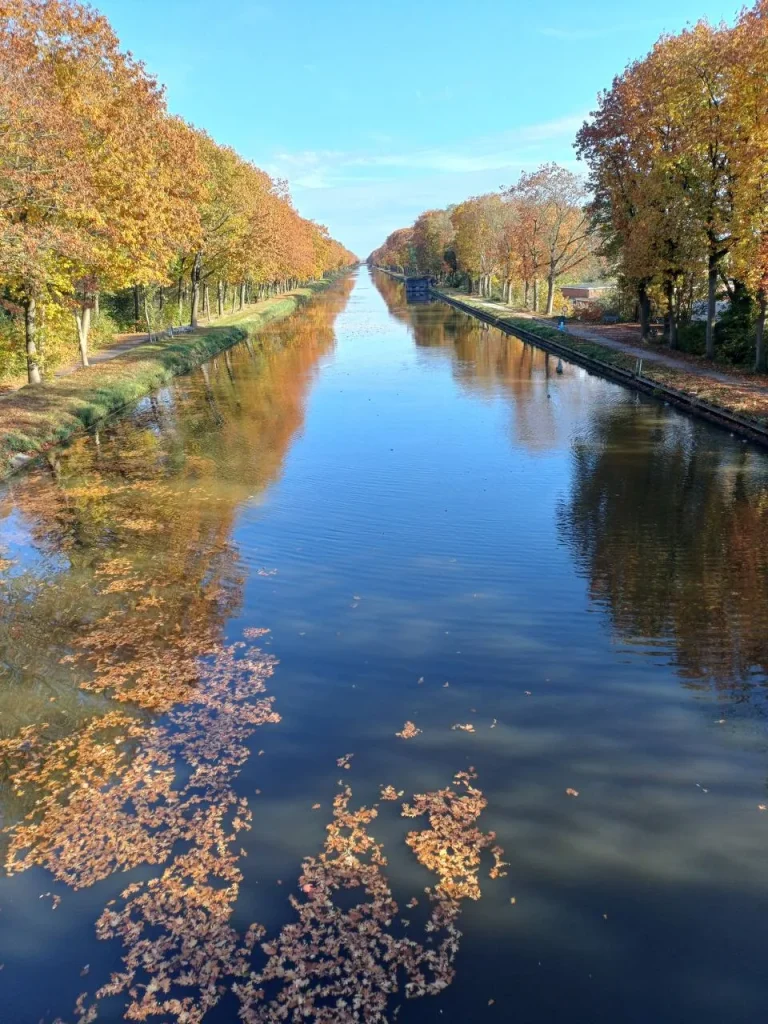
More than 2,500 parks and green spaces, together with its lakes and the two rivers that cross it, the Spree and the Havel, shape its landscape. Berlin has a public cycling network of more than 2,000 kilometres and records more than two million bicycle journeys a day.
Its architecture gathers traces of many eras. Its museums, music, theatre, opera and a varied cuisine give body and shape to a vibrant, modern city that has been ahead of its time for more than a hundred years.
Public transport is also part of the Berlin experience. The network of U-Bahn (underground), S-Bahn (city rail), trams and buses links the neighbourhoods and lets us move around the city like its residents.
José García Iborra and Berlin
José García Iborra is your guide and will accompany you throughout the journey. Berlin is the metropolis he knows best in the world. He has known it since 1983, when the Wall still divided the city. He was there when it fell in 1989.
Since then he has returned many times and has lived in Berlin at different stages of his life. He has accompanied thousands of travellers. In 2011 he spent eight months in the city as translator of an architecture guide; in 2016 and 2017 he worked as a local guide. He witnessed reunification and the transformation that gave Berlin back its place as a world-class metropolis.
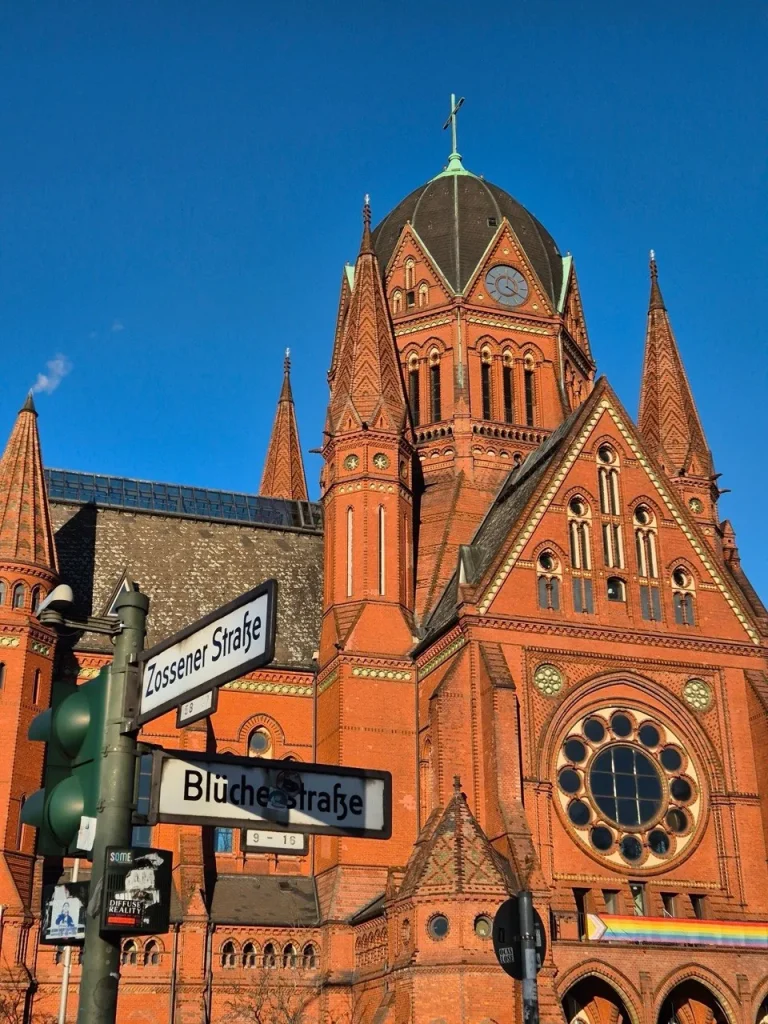
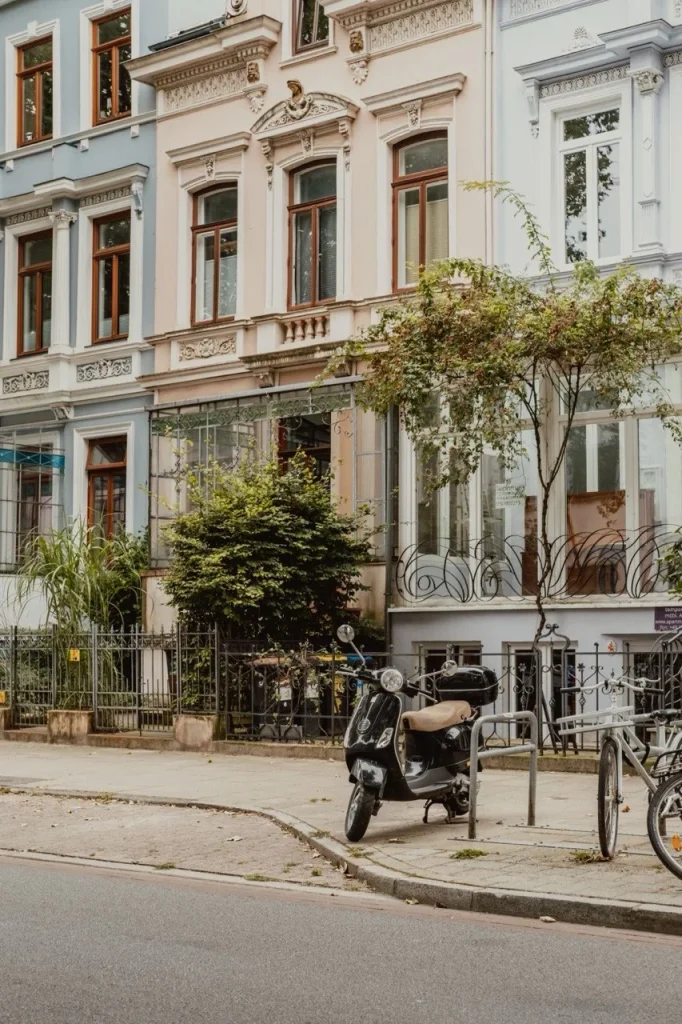
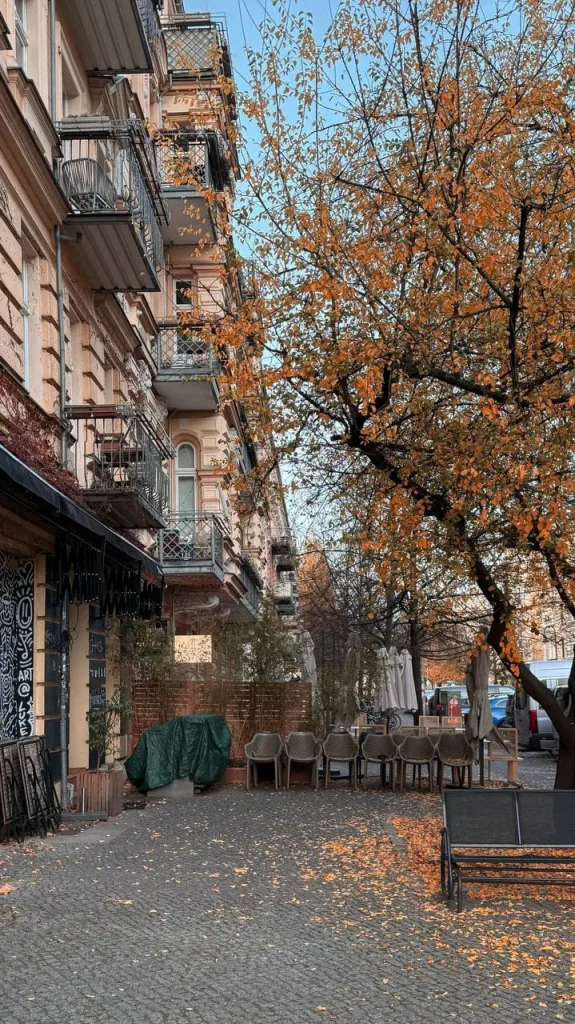
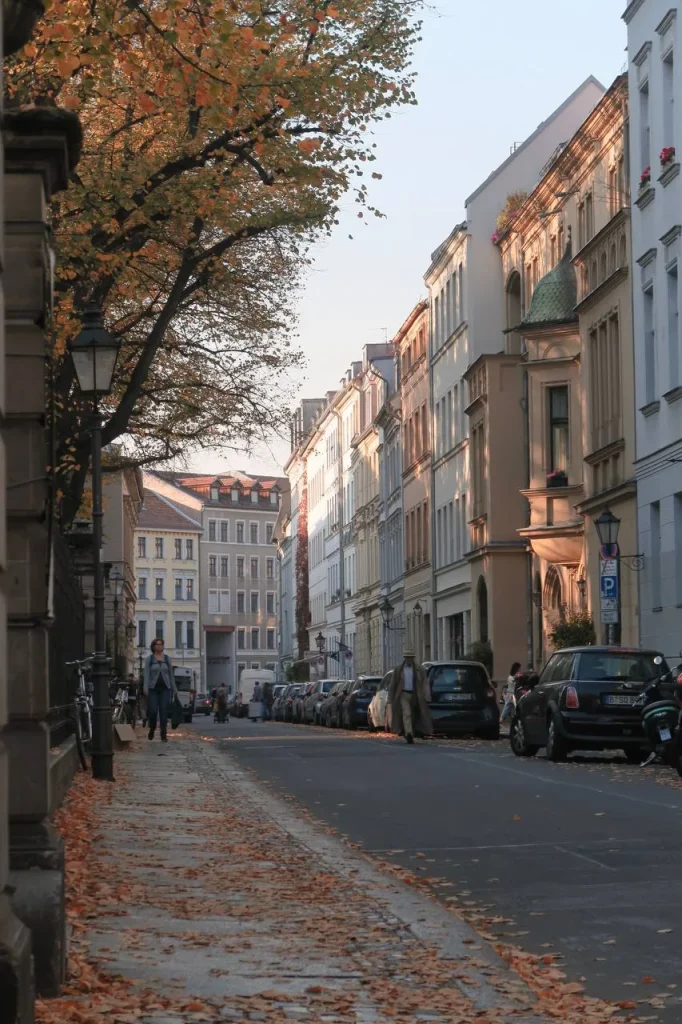
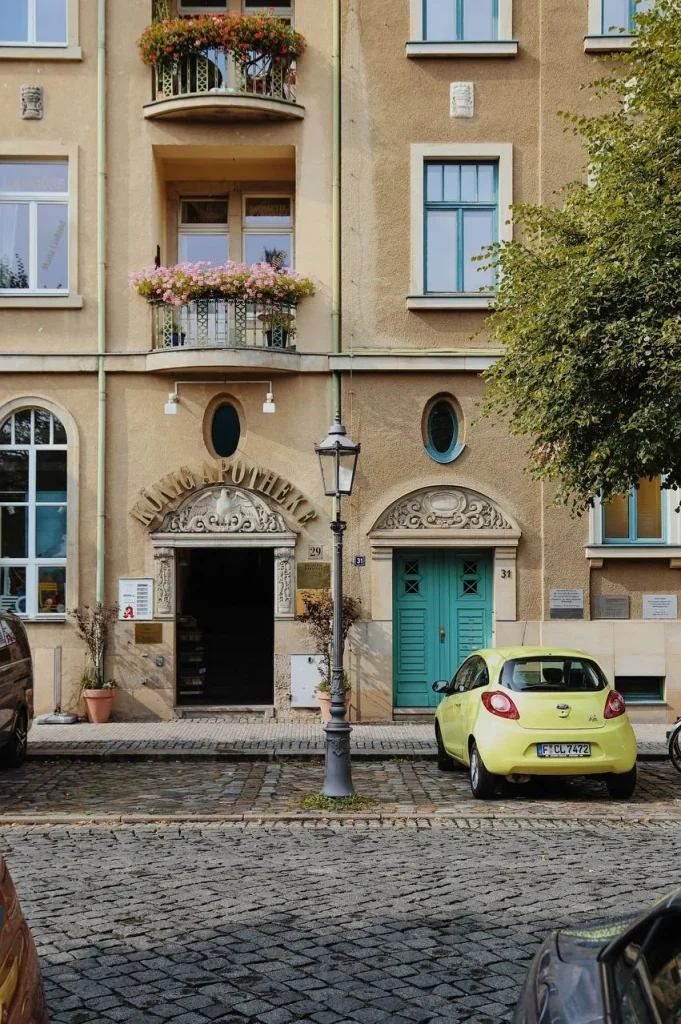
We stay in Prenzlauer Berg, one of Berlin's best-loved neighbourhoods. Its squares, tree-lined streets, well-kept architecture, independent boutiques and distinctive cafés create a serene atmosphere. After reunification, its buildings and public spaces underwent a deep renovation. The neighbourhood is very well connected with the rest of the city.
The programme we have designed is the journey. We want all of us to share in the same experience.
José, Agarta Viajes
What makes this journey unique
We begin on Museum Island, a Unesco World Heritage Site. We visit the Neues Museum, a magnificent building both outside and in.
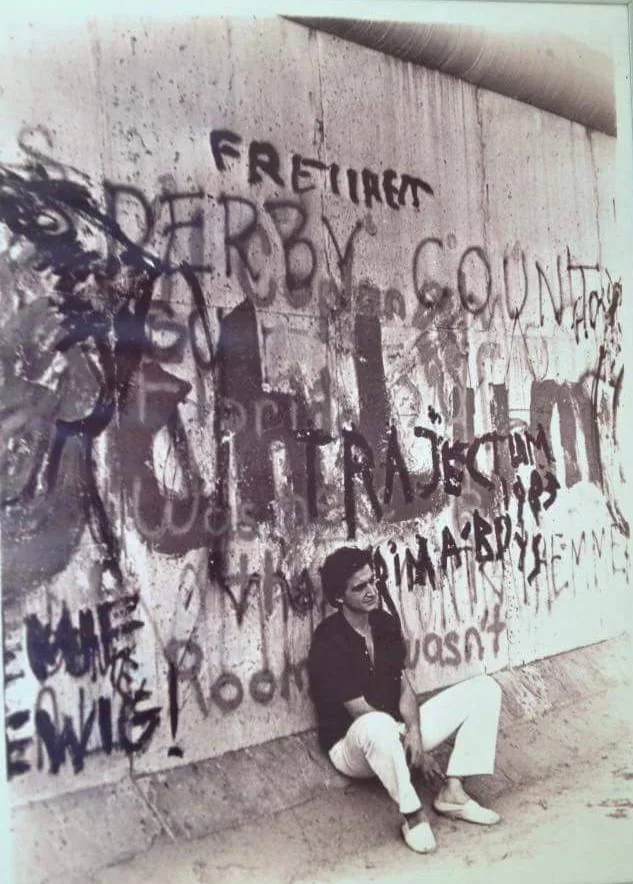
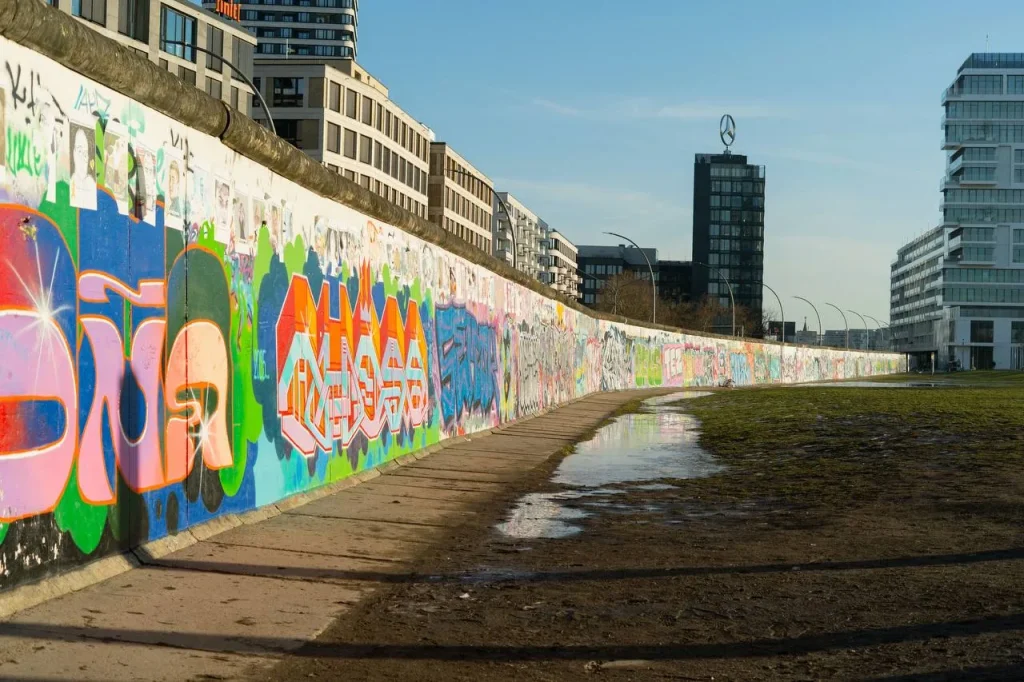
After the fall of the Wall, in 1990, 118 artists from 21 countries painted its eastern side, until then blank and out of reach.
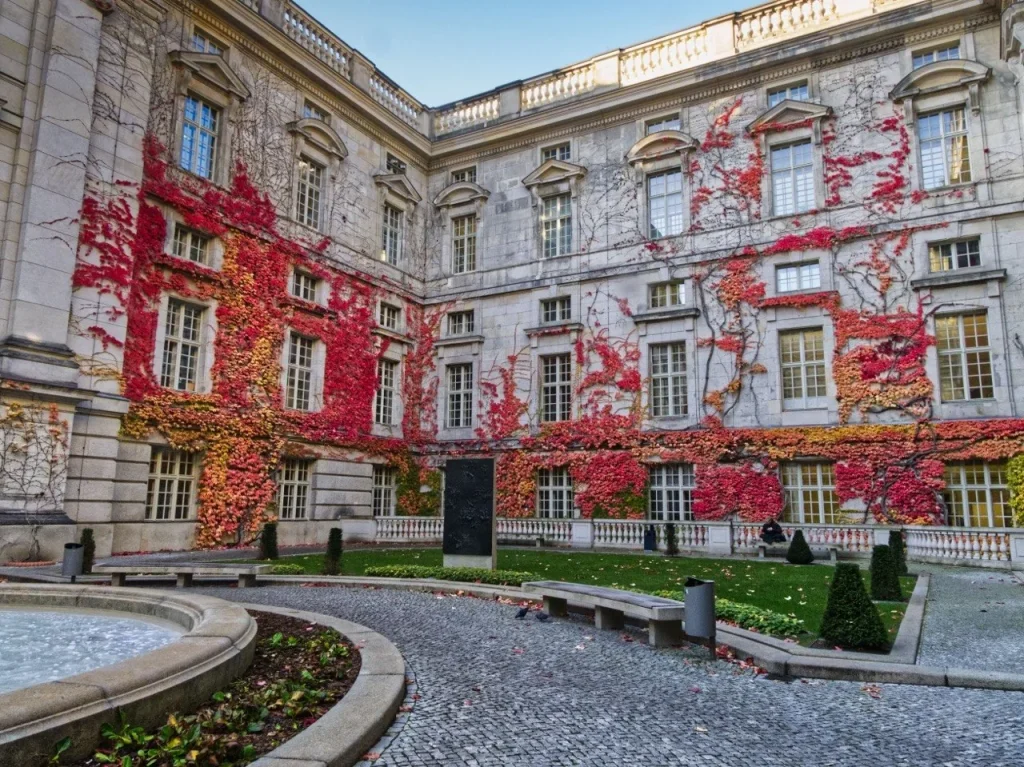
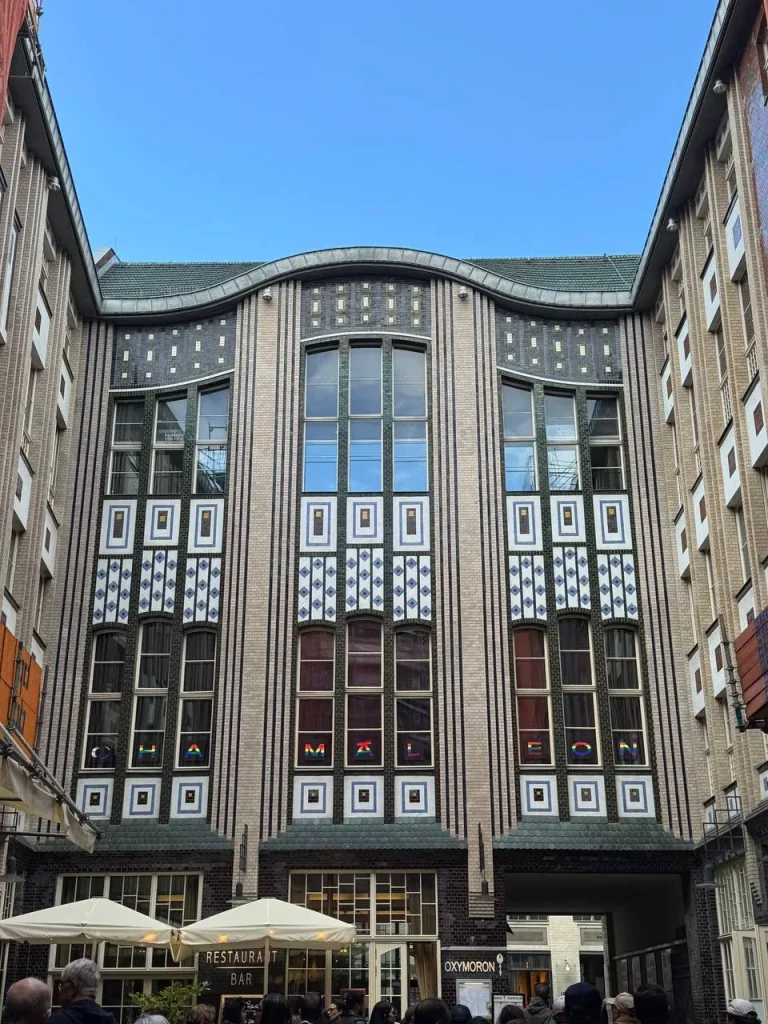
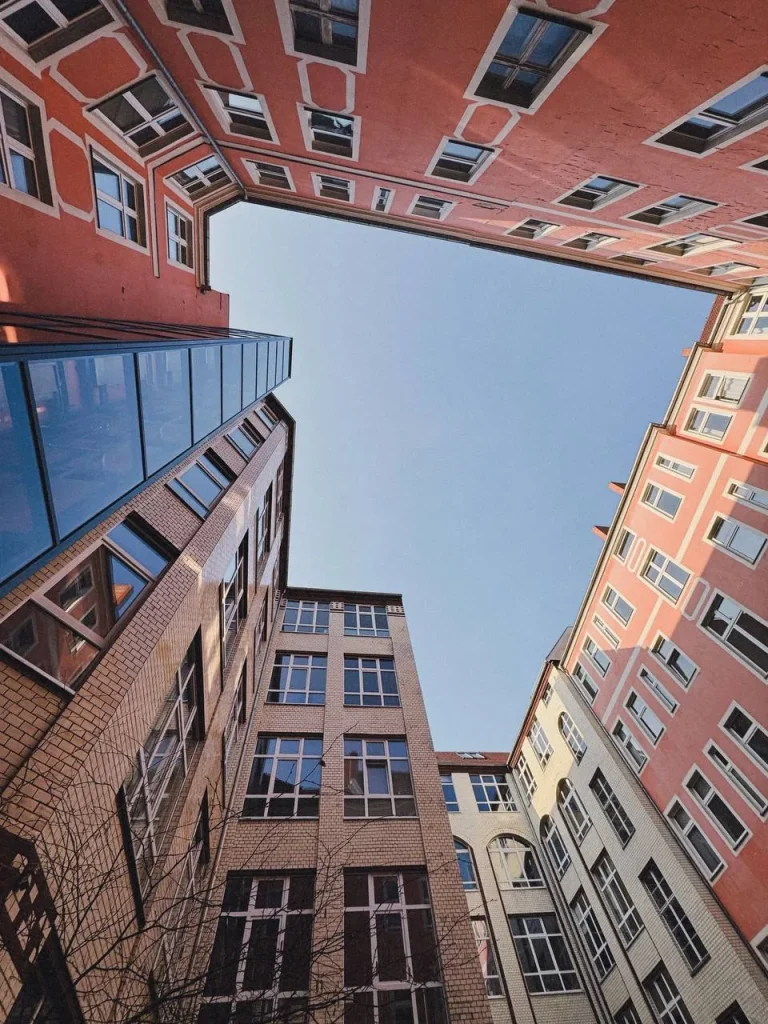
In the Hackesche Höfe, eight connected courtyards, stepping in from the street reveals another scale of the city.
Day by day
Arrival at the hotel, assistance and orientation. We leave time to settle in and rest.
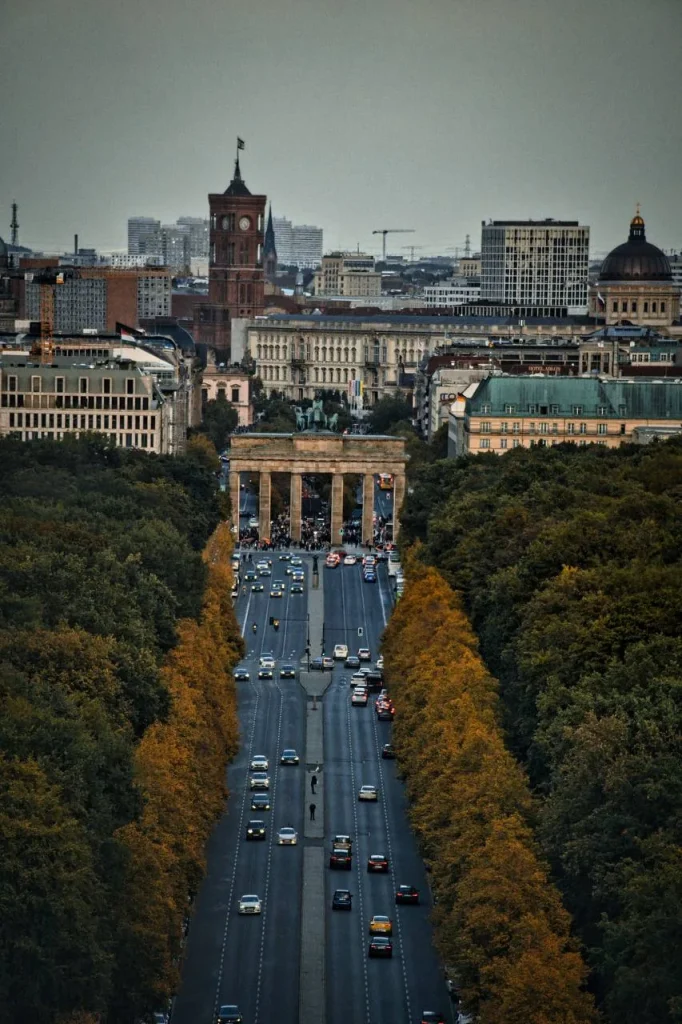
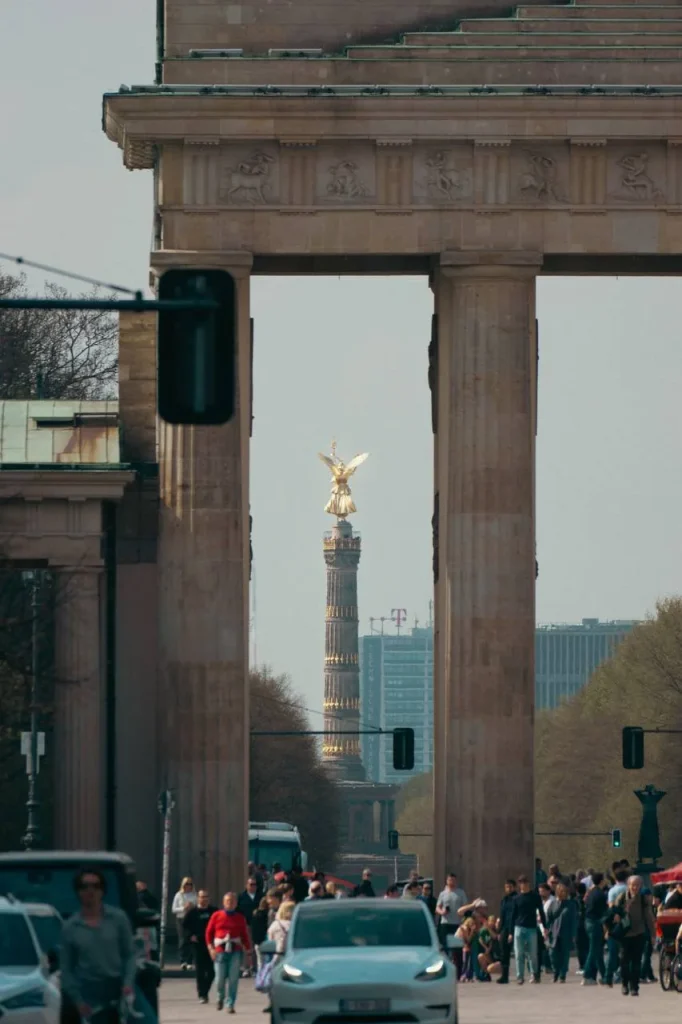
We begin by the Brandenburg Gate and walk through the government quarter. We stop in front of the Reichstag, seat of the German Parliament. Norman Foster's intervention preserved the historic building and added the famous glass dome, a masterpiece of contemporary architecture. Nearby are the Memorial to the Murdered Jews of Europe and the memorial dedicated to the Sinti and Roma.
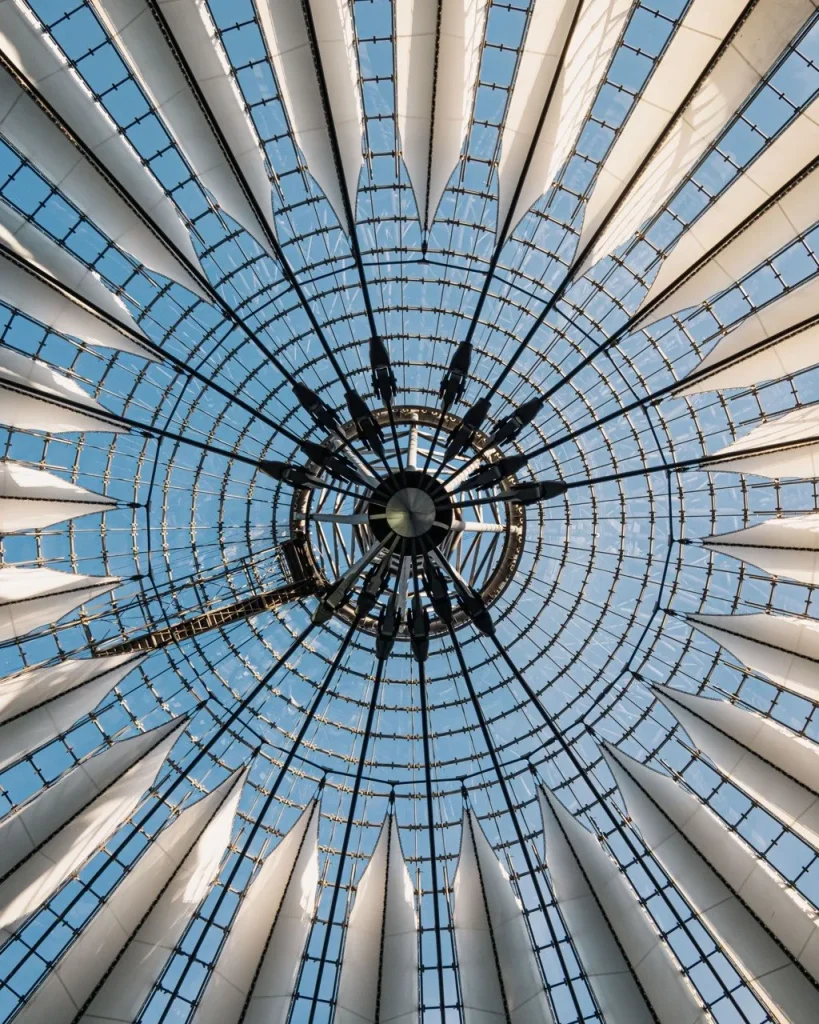
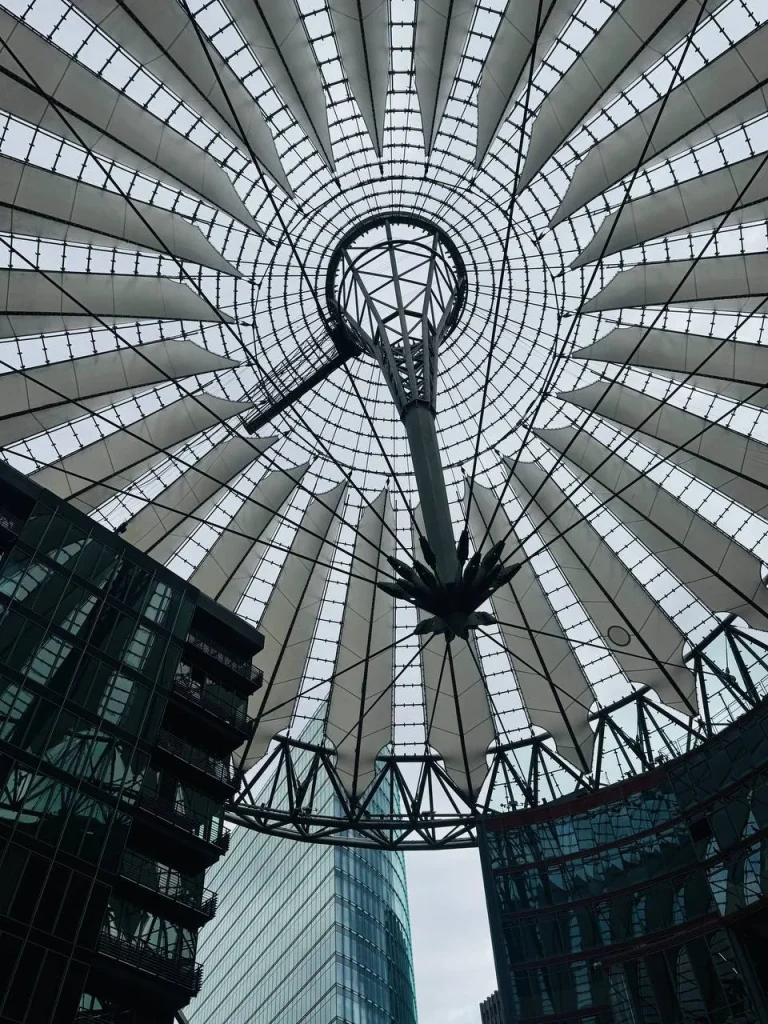
At Potsdamer Platz we discover the architecture that emerged after reunification: the master plan by Renzo Piano and Christoph Kohlbecker for the Daimler quarter, buildings by Richard Rogers and by the Japanese architect Arata Isozaki, Hans Kollhoff's tower, Helmut Jahn's Sony Center and the Grand Hyatt by the Spanish architect Rafael Moneo. On Niederkirchnerstraße we see a preserved stretch of the Wall.
Then we cross the Tiergarten, Berlin's great central park and green lung. We take a break by the lake at the historic Café am Neuen See and continue our walk along the canal towards the Zoologischer Garten. We pass Bikini Berlin and head to KaDeWe, one of the city's most iconic department stores.
Its sixth floor, Die Sechste, is a gastronomic landmark in Berlin and internationally. It brings together restaurants and bars, cafés, pastry shops, bakeries and a wine shop with wines and products from around the world. The visit lets us get to know this space and stop for lunch in the area.
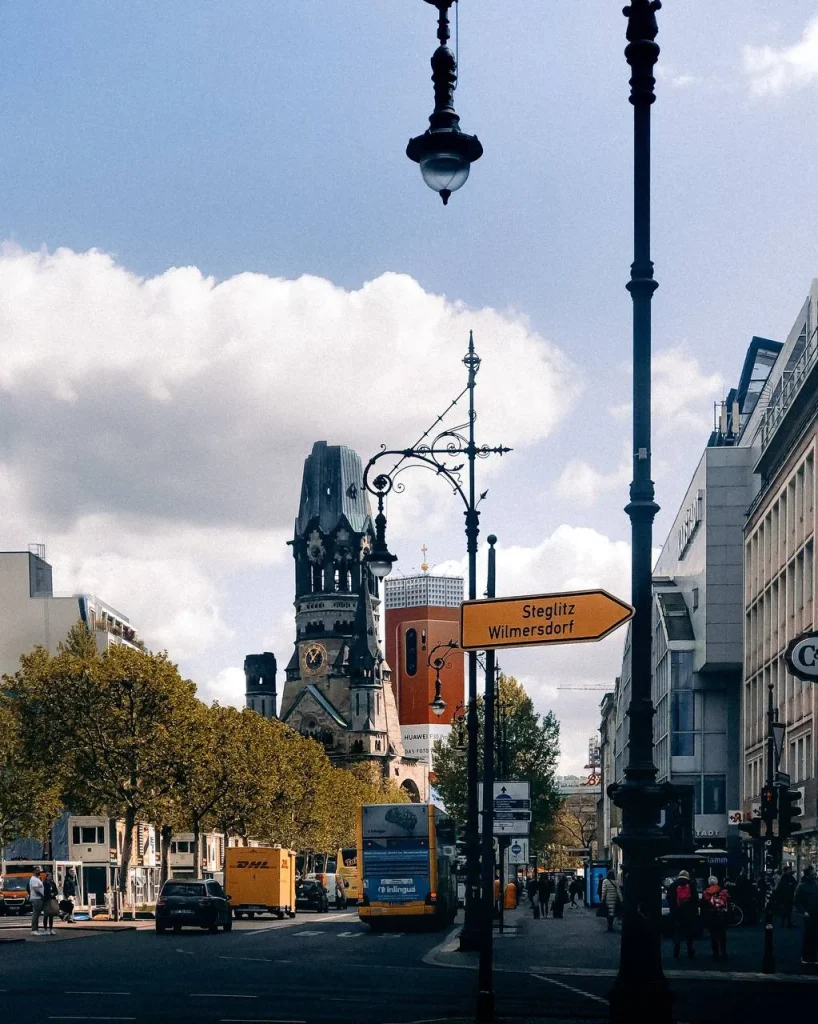
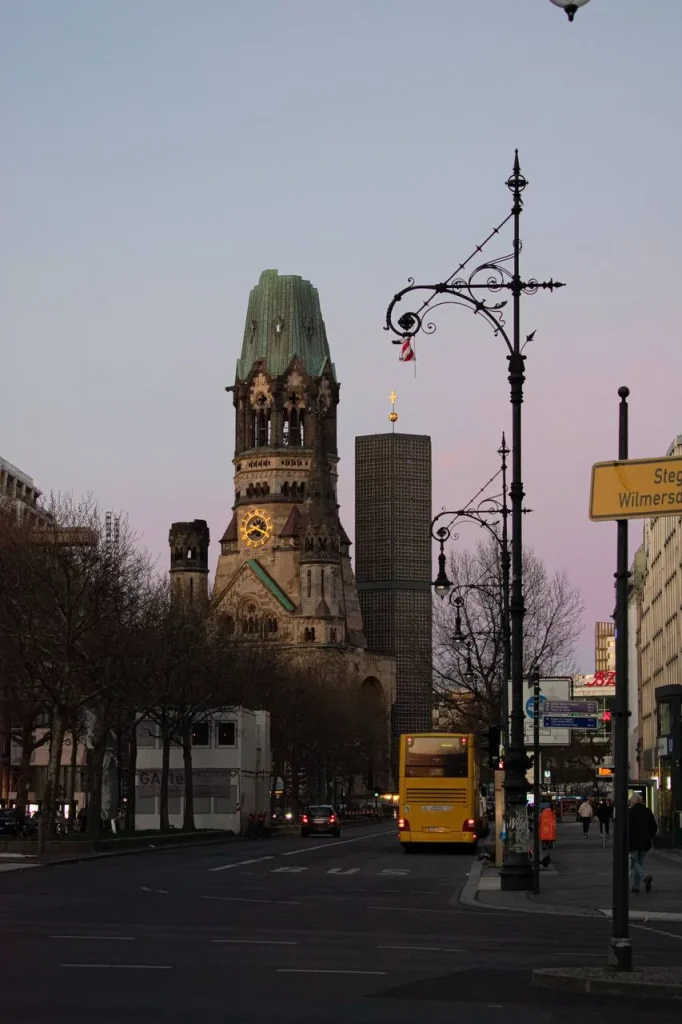
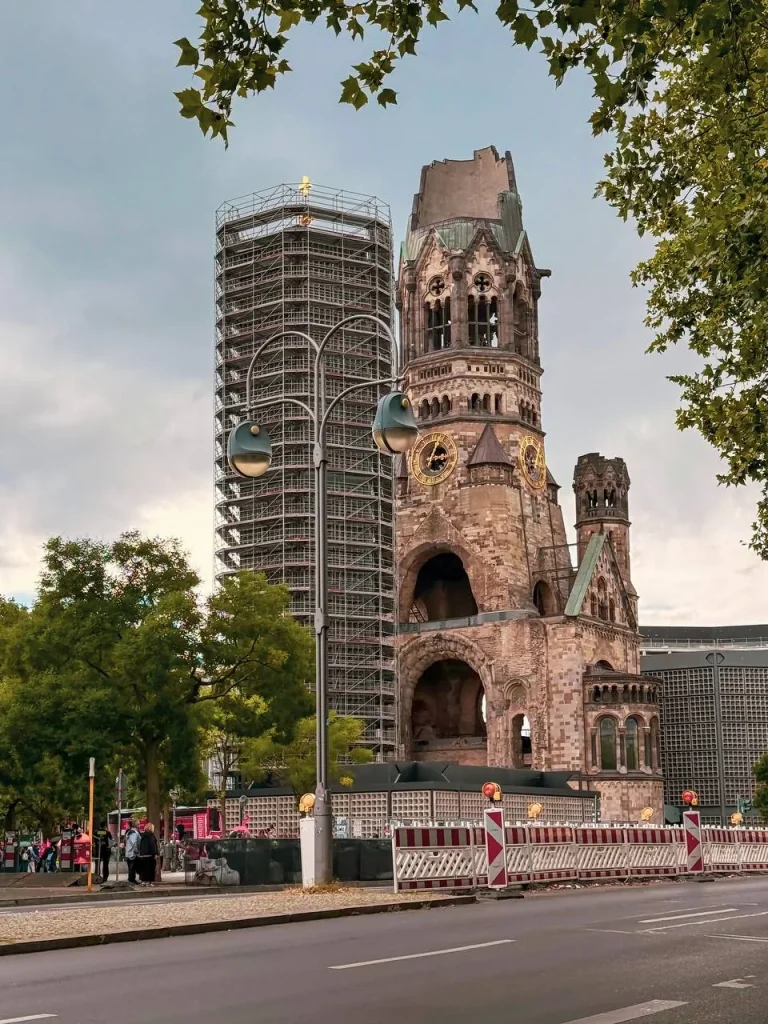
In the afternoon we enter the Memorial Church to admire the stained glass of the new church. We walk along the Ku'damm, the iconic avenue of West Berlin, and stop at the Café Wintergarten in the Literaturhaus Berlin, on Fasanenstraße. From there we return to the hotel.
We begin at the East Side Gallery, on Mühlenstraße, between Ostbahnhof and the Oberbaumbrücke. After the fall of the Wall, in 1990, 118 artists from 21 countries painted its eastern side, until then blank and out of reach. More than a hundred works turned the old barrier into an open-air gallery: a tribute to regained freedom and to the hope of a reunified city. The gallery opened a few days before Germany's official reunification.
At the end of the walk we take the S-Bahn to the Hauptbahnhof. There we stop to explore the inside of Berlin's central station, opened in 2006 and now an icon of modern architecture.
A few minutes away is the Hamburger Bahnhof - National Gallery of Contemporary Art, an international reference. It occupies the former railway station that linked Berlin with Hamburg, a monumental 19th-century building. Its collections include works by key artists such as Joseph Beuys, Andy Warhol, Robert Rauschenberg and Cy Twombly.
Then we return to the hotel in Prenzlauer Berg to rest and get ready for the evening. At night we attend an opera performance at the Staatsoper Unter den Linden, one of the great opera houses of Berlin and the world.
We begin on Museum Island, a Unesco World Heritage Site. We visit the Neues Museum, a magnificent building both outside and in. Its Egyptian and prehistoric collections bring us closer to centuries of history; among its best-known pieces is the bust of Nefertiti.
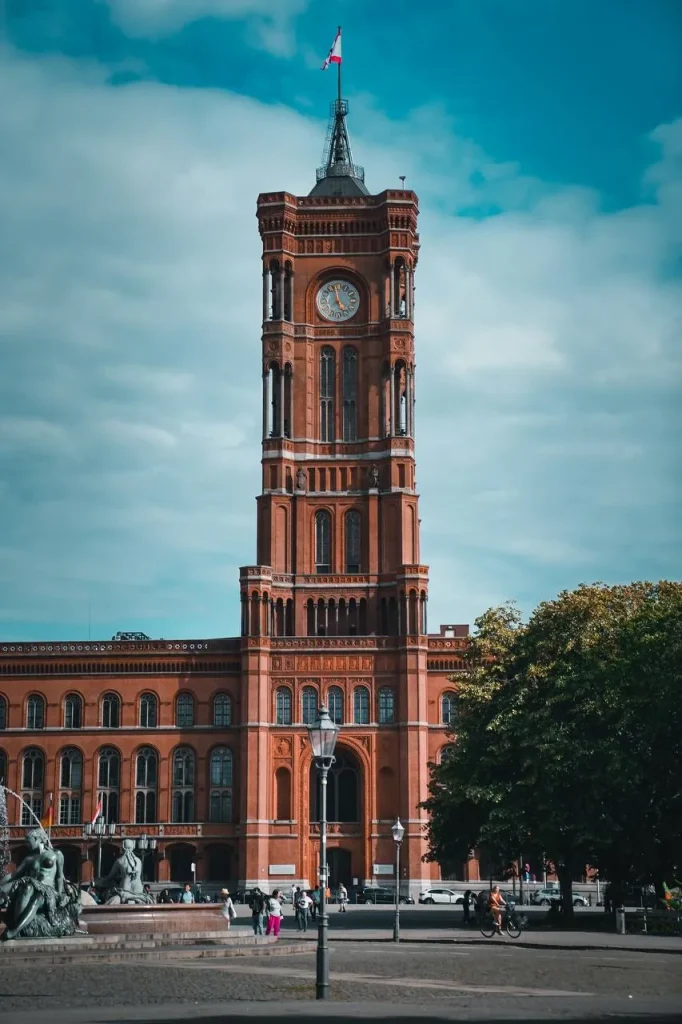
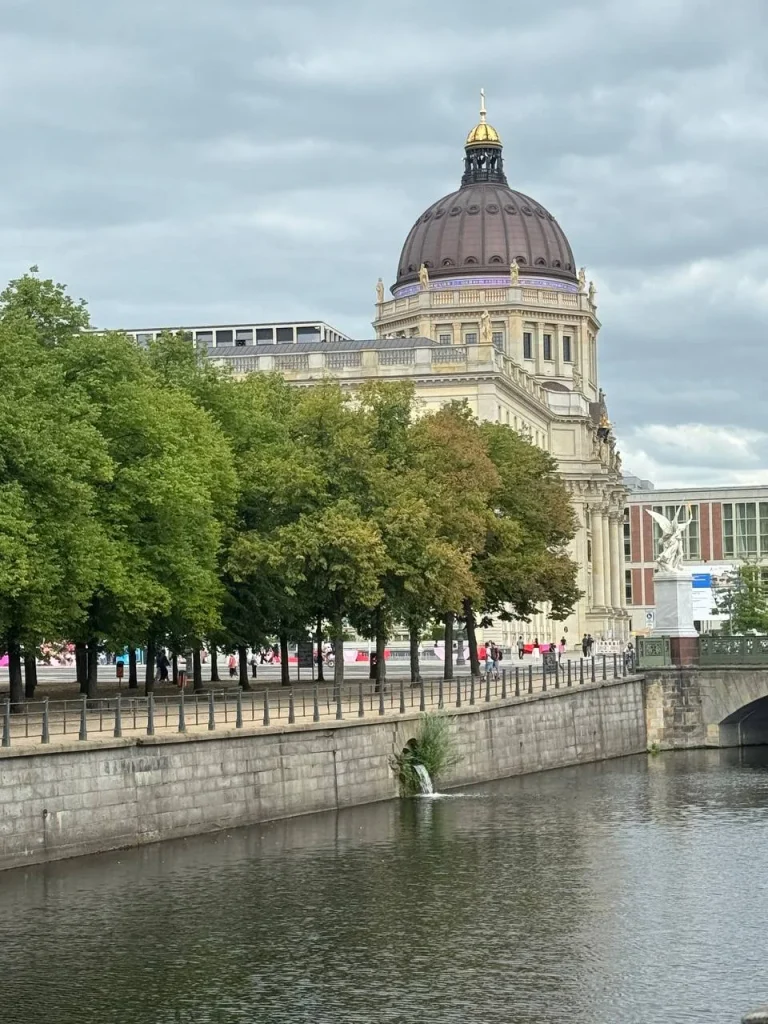
Then we walk through the historic centre. From the Nikolaiviertel we pass the Rotes Rathaus, Berlin's City Hall, recognisable by its monumental red-brick façade, and head to the Humboldt Forum, housed in the reconstruction of the former Royal Palace, where baroque façades sit alongside contemporary architecture. We continue via Werderscher Markt to Hausvogteiplatz, linked for generations to tailors, dressmakers and Berlin's textile industry.
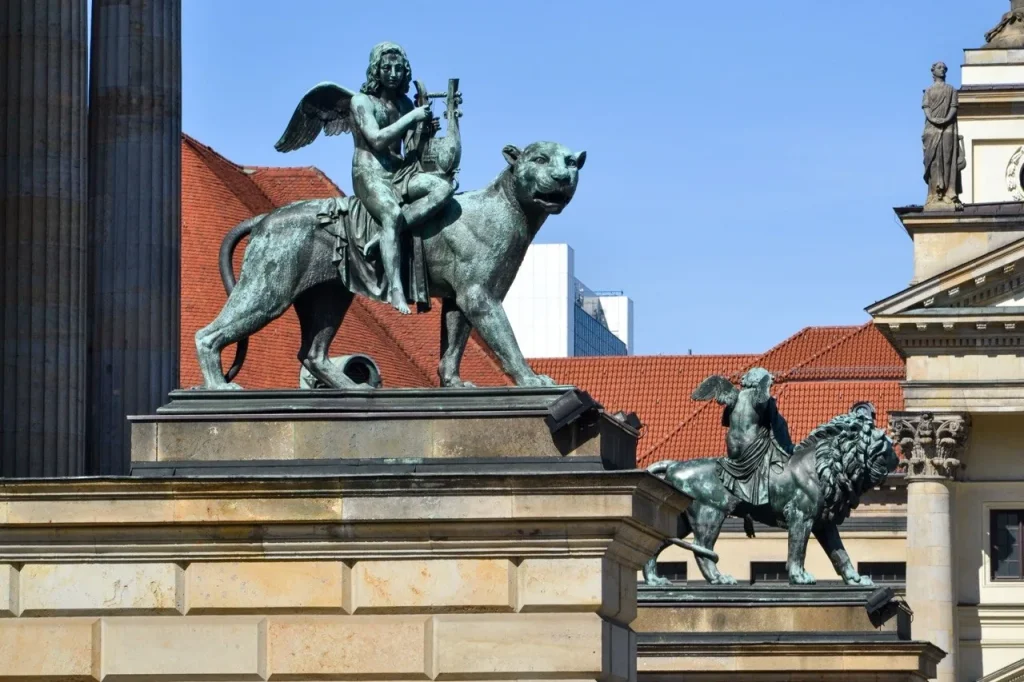
From there we reach Gendarmenmarkt and continue past Bebelplatz, St. Hedwig's Cathedral and Humboldt University. The walk ends at Hackescher Markt, where we stop for lunch.
In the afternoon we explore the Spandauer Vorstadt, the old suburb where Jewish life had a strong presence and where trade, religion, culture and memory intertwine. In the Hackesche Höfe, eight connected courtyards, stepping in from the street reveals another scale of the city. The first stands out for its Art Nouveau façade; shops, workshops, cafés and cultural spaces share the complex.
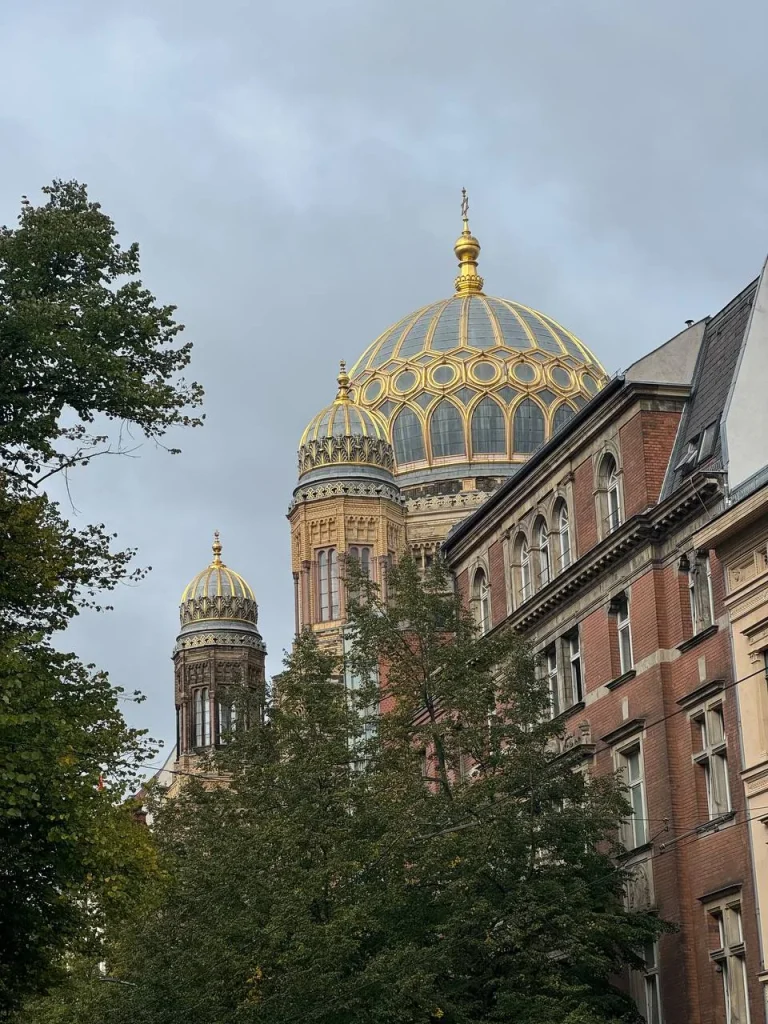
We continue along Große Hamburger Straße to the New Synagogue, recognisable by its golden dome. Its history speaks of the splendour of Berlin's Jewish community, of Nazi persecution and of the later effort to recover its memory and its presence in the city. On the pavements we find Stolpersteine: plaques that give names and individual stories back to the streets of the neighbourhood. We finish by Monbijoupark and return by tram to Prenzlauer Berg.
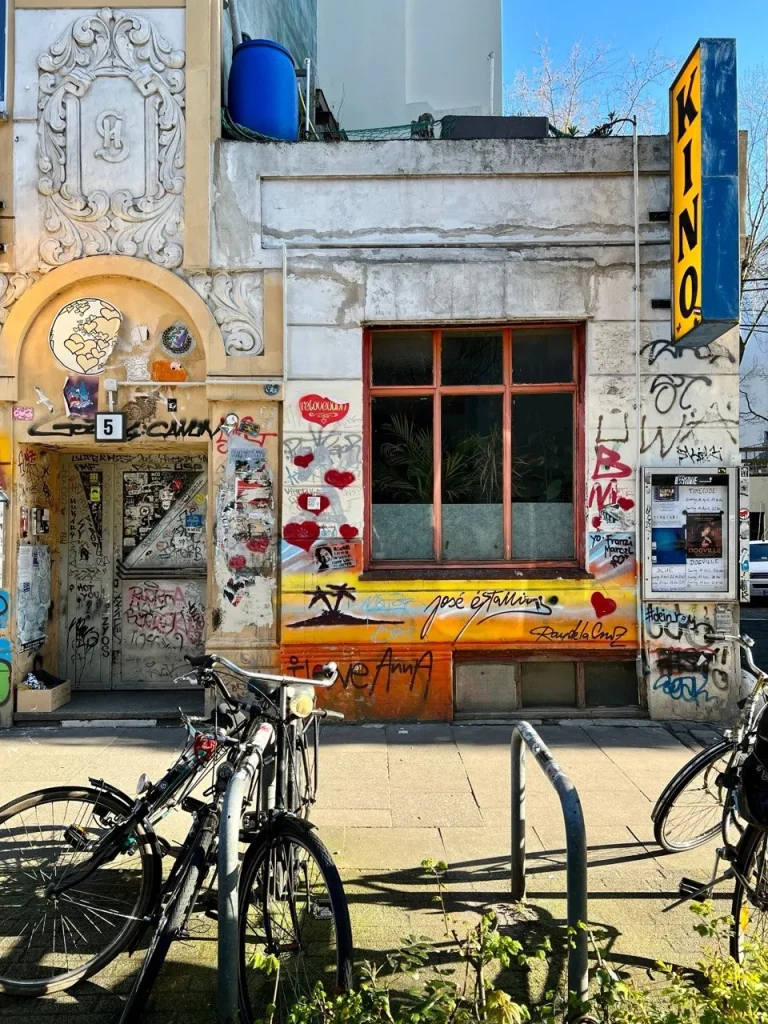
On Sunday we head into Kreuzberg and Neukölln, two neighbourhoods of an everyday, very lively Berlin. On Maybachufer, the Nowkoelln Flowmarkt gathers second-hand, design and one-of-a-kind stalls by the canal. We walk through the market and follow the Landwehrkanal along the Paul-Lincke-Ufer, among cafés, terraces and small shops.
In Kreuzberg we stroll through the Bergmannkiez, with its streets of shops, cafés and small boutiques. We visit Mariannenplatz and Bethanien. The Engelbecken, surrounded by gardens and water, keeps the memory of the old Luisenstadt canal.
In Neukölln we discover Alt-Rixdorf, around Richardplatz: narrow streets, low houses and courtyards that keep the feel of an old village inside the big city. Nearby, the Körnerpark surprises with its neo-baroque garden, its terraces and its Orangerie.
In the late afternoon we return to the hotel.
Time to stroll around our beloved neighbourhood of Prenzlauer Berg.
Until the next journey.
Departure and conditions
Planned hotels. Hotel Oderberger, Oderberger Straße 57, 10435 Berlin. Myer's Hotel Berlin, Metzer Straße 26, 10405 Berlin.
We have chosen Prenzlauer Berg, one of Berlin's best-loved neighbourhoods, for its well-kept architecture, its calm atmosphere, its cafés and its distinctive shops. Hotel Oderberger and Myer's Hotel Berlin are two leading boutique hotels, first-class and with very special architecture. The neighbourhood and the hotels are an essential part of the journey.
The order of some days may be adjusted for logistical reasons or because of the cultural programme. The essence of the journey remains.
No added costs along the way
Three steps
Request your place with the “Request a booking” button or write to us at hola@agartaviajes.com.
We tell you in writing the first payment and the deadlines, and send you your booking confirmation.
You receive all the information about the journey and the destination requirements before you leave.