BAJA CALIFORNIA SUR, MEXICO
IN THE TIME OF THE WHALES
Why have WHALES always fascinated human beings so much?
In the ancestral furrows of humanity's imagination and memory lives an immense, kind and mysterious animal.
Some of us dream of whales. When we feel them so close, we sometimes cry out with joy and our eyes fill with tears. It is a very pure feeling, hard to explain.
Many of us are willing to travel thousands of kilometres to the Sea of Cortez, in Mexico, to be close to the whales, at least once in our lives.
Between February and March, several whale routes converge in Baja California Sur, Mexico.
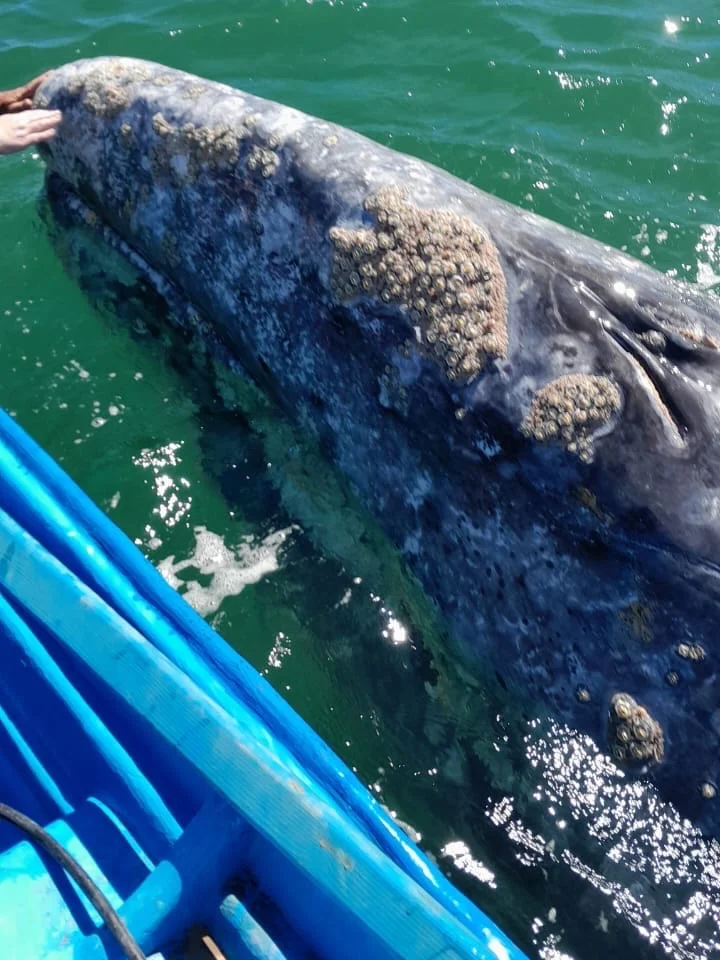
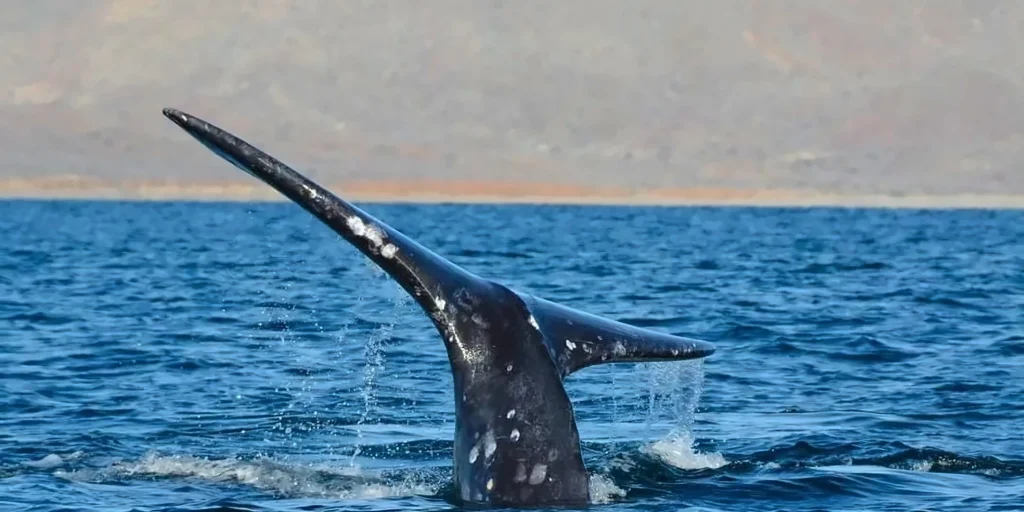
On the Pacific coast, the grey whale migrates from its feeding grounds in the Arctic, mainly in the Bering and Chukchi Seas, to the lagoons of the peninsula. There, the females give birth to and nurse their calves. Bahía Magdalena and Bahía Almejas are part of that lagoon complex.
Every winter, blue whales feed in the waters of the Bahía de Loreto National Park, in the Sea of Cortez. The blue whale is the largest animal known ever to have lived on Earth.
Humpback whales also pass through the waters of the southern Sea of Cortez. The fin whale is present in these waters too.
At the Whale Museum in La Paz, our team of biologists tells us many other stories and teaches us about the whales: their routes, their reproduction and their calls.
The journey · Baja California Sur · In the time of the whales →